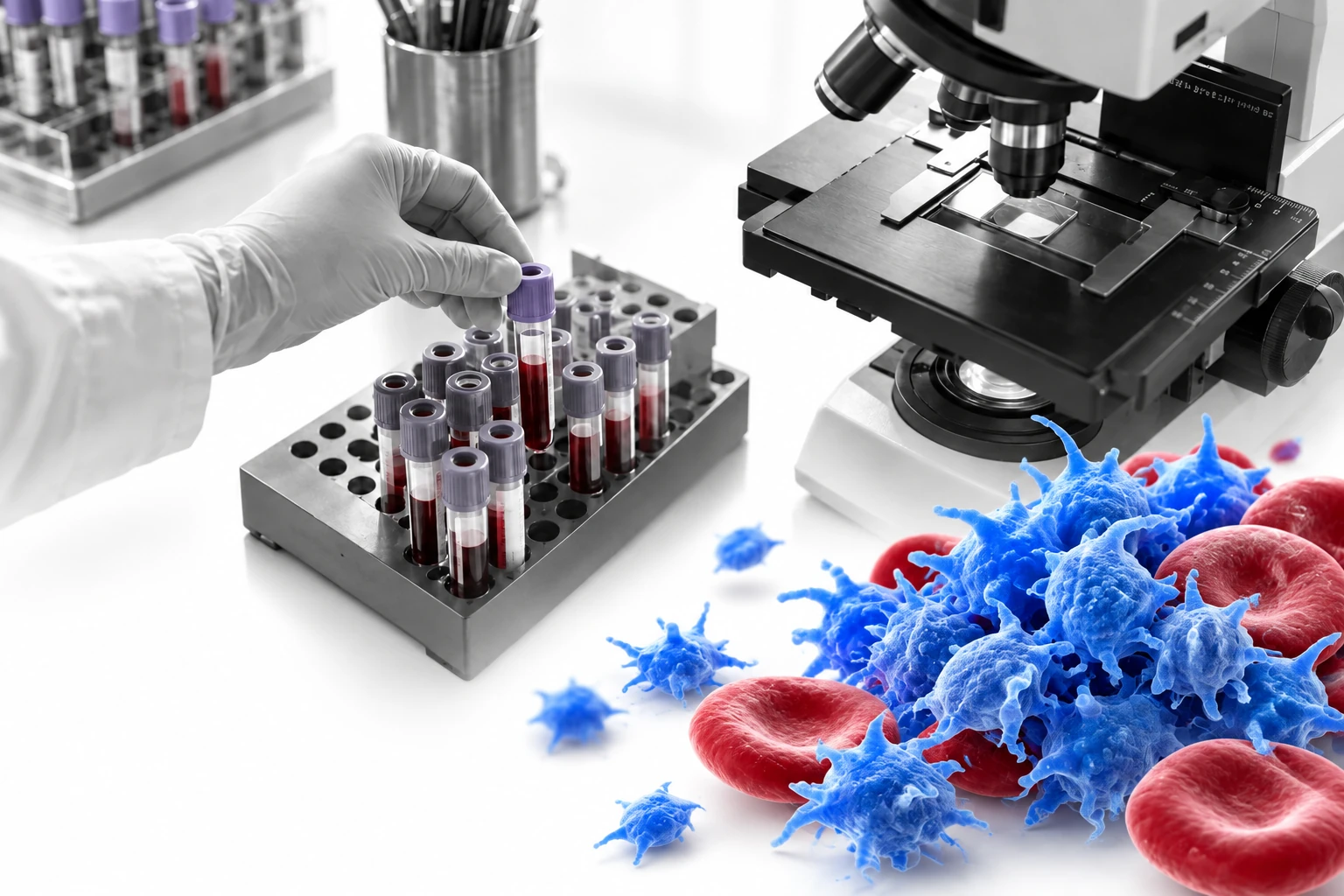
توضیح تکمیلی: افزایش پلاکت چیست؟
Understanding thrombocytosis
- افزایش پلاکت ممکن است واکنشی به مشکل دیگری باشد یا از بیماری سلولهای خونساز مانند ترومبوسیتمی اساسی ناشی شود.
- این دو حالت خطر و درمان یکسانی ندارند.
- A high platelet count may be reactive to another condition or arise from a marrow disorder such as essential thrombocythemia.
- Their risks and treatment differ.
توضیح تکمیلی: جایگاه و اهمیت
Why it matters
- افزایش پلاکت اغلب واکنشی به مشکل دیگری مانند التهاب یا فقر آهن است.
- افزایش پایدارِ بدون علت نیاز به بررسی بیماریهای مغز استخوان دارد.
- Raised platelets are often reactive to inflammation or iron deficiency.
- Persistent unexplained elevation needs assessment for marrow disorders.
توضیح تکمیلی: علائم و نشانهها
Signs and symptoms
- اغلب بدون علامت است.
- در برخی بیماریهای مغز استخوان: سردرد، اختلال گذرای دید یا سوزش دست و پا
- درد قفسه سینه، ضعف ناگهانی یا تنگی نفس اورژانسیاند.
- Often causes no symptoms.
- With some marrow disorders: headache, transient visual changes or burning hands and feet
- Chest pain, sudden weakness or breathlessness are emergencies.
توضیح تکمیلی: عوامل خطر و علتها
Risk factors and causes
- عفونت، التهاب، فقر آهن یا برداشتن طحال
- افزایش پایدار بدون علت: بررسی بیماری مغز استخوان و گاهی JAK2، CALR یا MPL
- Infection, inflammation, iron deficiency or spleen removal
- Persistent unexplained elevation: marrow assessment and sometimes JAK2, CALR or MPL testing
توضیح تکمیلی: روشهای تشخیص
Diagnostic assessment
- تکرار CBC (شمارش کامل خون؛ تعداد و اندازهٔ سلولهای خونی و پلاکتها را میسنجد)، اسمیر، فریتین و شواهد التهاب به یافتن علت کمک میکنند.
- در افزایش پایدار بدون علت روشن، آزمایشهای مولکولی و گاهی نمونه مغز استخوان برای بررسی بیماری میلوپرولیفراتیو لازماند.
- Repeat CBC (a complete blood count that measures blood cells and platelets), smear, ferritin and inflammation assessment help find the cause.
- Persistent unexplained elevation may require molecular tests and sometimes marrow biopsy for a myeloproliferative neoplasm.
توضیح تکمیلی: علت و میزان افزایش پلاکت
Cause and degree of platelet elevation
- ابتدا مشخص میشود افزایش پلاکت موقتی و واکنشی به التهاب، عفونت یا کمبود آهن است یا پایدار و ناشی از اختلال مغز استخوان.
- عدد بالاتر از ۴۵۰ هزار در هر میکرولیتر معمولاً افزایش پلاکت محسوب میشود؛ تفسیر به تکرار آزمایش و شرایط فرد وابسته است.
- Assessment distinguishes a temporary reactive rise, such as from inflammation, infection or iron deficiency, from a persistent bone-marrow disorder.
- A count above 450,000 per microlitre is commonly considered elevated; interpretation depends on repeat testing and the person’s context.
توضیح تکمیلی: درمان
Treatment
- افزایش واکنشی با درمان علت پیگیری میشود.
- در ترومبوسیتمی اساسی، سابقه لخته، سن، جهشها و خطر خونریزی بر نیاز به داروی ضدپلاکت یا کاهشدهنده پلاکت اثر دارند؛ آسپرین خودسرانه ایمن نیست.
- Reactive elevation is managed by treating its cause.
- In essential thrombocythemia, clot history, age, variants and bleeding risk guide antiplatelet or platelet-lowering treatment; aspirin should not be self-started.
دو مسیر متفاوت
Two different pathways
- ترومبوسیتوز واکنشی میتواند همراه التهاب، عفونت، فقر آهن یا بعضی شرایط دیگر دیده شود. thrombocythemia اولیه یک اختلال مغز استخوان است و ارزیابی متفاوتی دارد.
- Reactive thrombocytosis can occur with inflammation, infection, iron deficiency and other conditions.
- Primary thrombocythemia is a bone-marrow disorder and follows a different evaluation pathway.
بررسی علت
Finding the cause
- تکرار CBC، اسمیر خون و بررسی شرایطی مانند فقر آهن یا التهاب میتواند کمککننده باشد.
- اگر افزایش پلاکت پایدار و بدون علت واضح باشد، بررسیهای تکمیلی از جمله آزمایشهای مولکولی ممکن است لازم شوند.
- Repeating the CBC, reviewing the blood smear and checking for conditions such as iron deficiency or inflammation may help.
- Persistent unexplained thrombocytosis may require further evaluation, including molecular testing (a test that looks for gene or molecular changes; results must be interpreted with the disease type).
خطر به علت بستگی دارد
Risk depends on the cause
- عدد بالا بهتنهایی شدت خطر لخته یا خونریزی را مشخص نمیکند.
- سن، سابقه لخته، بیماری زمینهای و نوع اختلال در تصمیمگیری نقش دارند.
- A high number alone does not define the risk of clotting or bleeding.
- Age, prior clots, the underlying condition and the type of platelet disorder all (acute lymphoblastic leukemia, a fast-growing cancer of immature lymphoid cells) influence decisions.
افزایش واکنشی و مغز استخوانی
Reactive versus marrow-related elevation
- در افزایش واکنشی، پلاکت در پاسخ به عاملی مانند التهاب یا کمبود آهن بالا میرود.
- اگر عدد پایدار بماند، بررسی بیماریهای تکثیری مغز استخوان ممکن است لازم شود؛ تشخیص فقط با عبور از یک آستانه انجام نمیشود.
- Reactive thrombocytosis responds to conditions such as inflammation or iron deficiency.
- Persistent elevation may warrant assessment for a marrow proliferative disorder; crossing a threshold alone does not establish the diagnosis.
لخته و خونریزی هر دو مهماند
Both clotting and bleeding matter
- در بعضی اختلالات، پلاکت بسیار بالا میتواند در کنار خطر لخته با خونریزی هم همراه باشد.
- سابقهٔ لخته، سن، علائم و نتایج اختصاصی در انتخاب درمان از خود عدد مهمتر میشوند.
- In some disorders, a very high platelet count can coexist with bleeding as well as clotting risk.
- Prior clots, age, symptoms and specific findings influence treatment beyond the number itself.