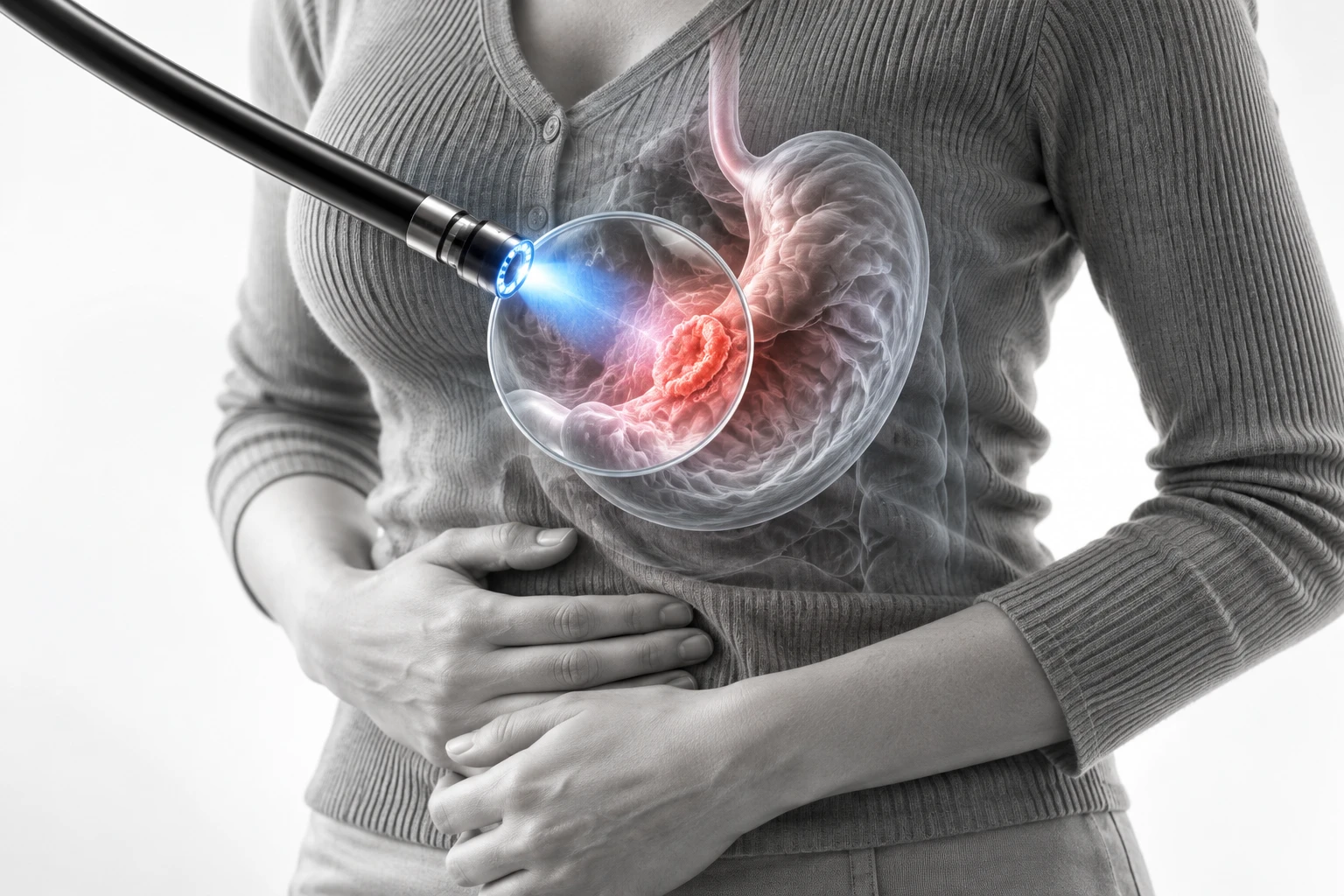
توضیح تکمیلی: سرطان معده چیست؟
Understanding stomach cancer
- بیشتر سرطانهای معده از سلولهای پوشاننده داخل معده شروع میشوند.
- این بیماری با زخم ساده معده یکسان نیست و برای تایید نوع آن به آندوسکوپی و نمونهبرداری نیاز است.
- Most stomach cancers arise from the stomach lining.
- Cancer differs from an ordinary stomach ulcer and requires endoscopy with biopsy to establish its type.
توضیح تکمیلی: جایگاه و اهمیت
Why it matters
- در ایران از سرطانهای مهم و شایع است و بار مرگومیر قابل توجهی دارد.
- توجه به علائم ماندگار و درمان هلیکوباکتر در افراد واجد شرایط اهمیت دارد.
- موارد جدید در ۲۰۲۴: ایران ۱۴٬۵۹۵؛ جهان ۹۸۰٬۲۸۶.
- An important, common cancer in Iran with a substantial mortality burden.
- Persistent symptoms and appropriate H. pylori treatment deserve attention.
- New cases in 2024: Iran 14,595; worldwide 980,286.
توضیح تکمیلی: علائم و نشانهها
Signs and symptoms
- سیری زودرس، کاهش وزن یا استفراغ ماندگار
- مشکل بلع، مدفوع سیاه یا کمخونی
- استفراغ خونی یا خونریزی همراه ضعف شدید: مراجعه فوری
- Early fullness, weight loss or persistent vomiting
- Swallowing difficulty, black stools or anemia
- Vomiting blood or bleeding with marked weakness: urgent care
توضیح تکمیلی: عوامل خطر و علتها
Risk factors and causes
- هلیکوباکتر پیلوری یا تغییرات پیشسرطانی معده
- سیگار، غذای بسیار شور یا برخی زمینههای ارثی
- درمان هلیکوباکتر در فرد واجد شرایط به کاهش خطر کمک میکند.
- H. pylori infection or precancerous stomach changes
- Smoking, high salt intake or inherited conditions
- Treating H. pylori when indicated helps reduce risk.
توضیح تکمیلی: روشهای تشخیص
Diagnostic assessment
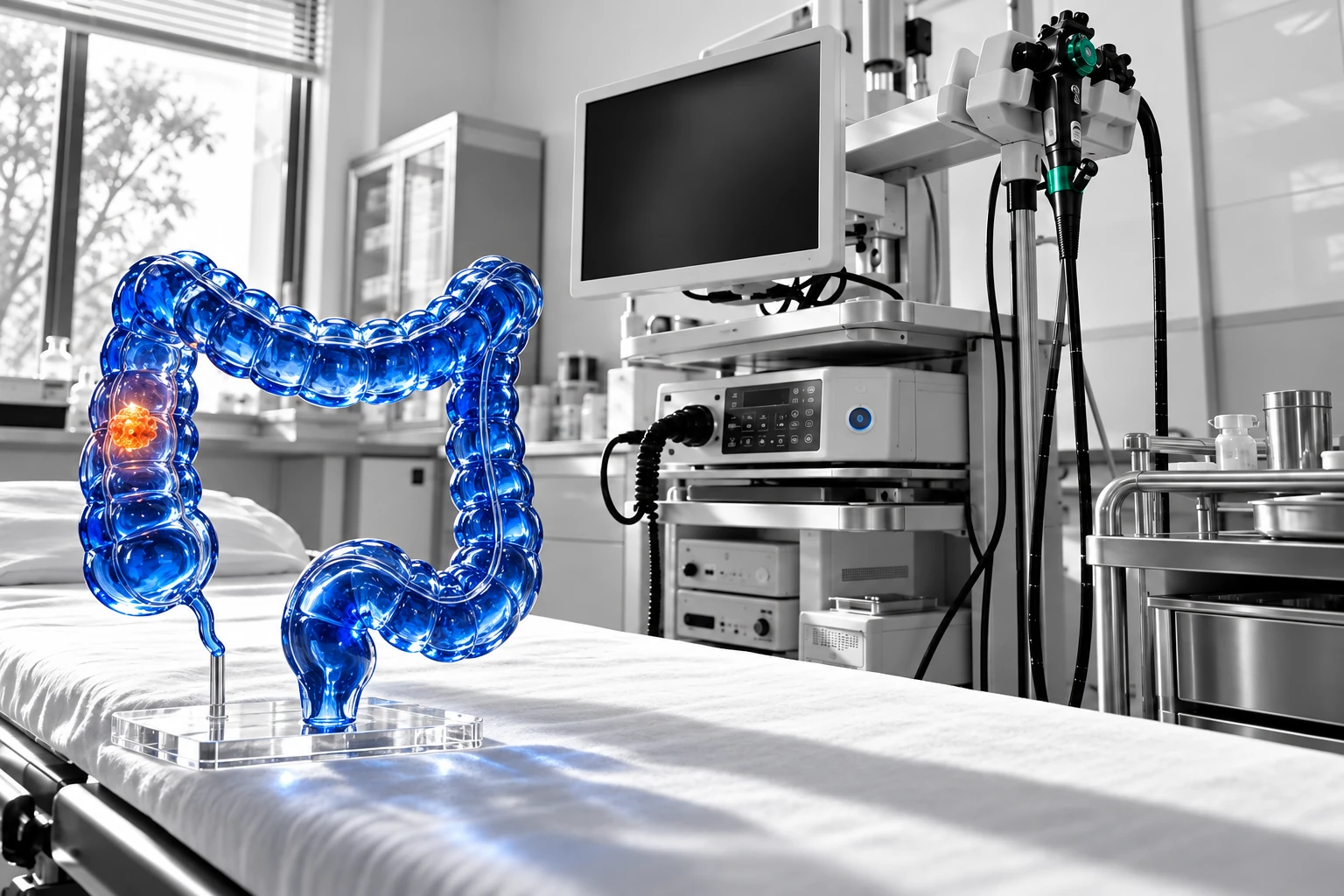
- آندوسکوپی فوقانی با نمونهبرداری اساس تشخیص است.
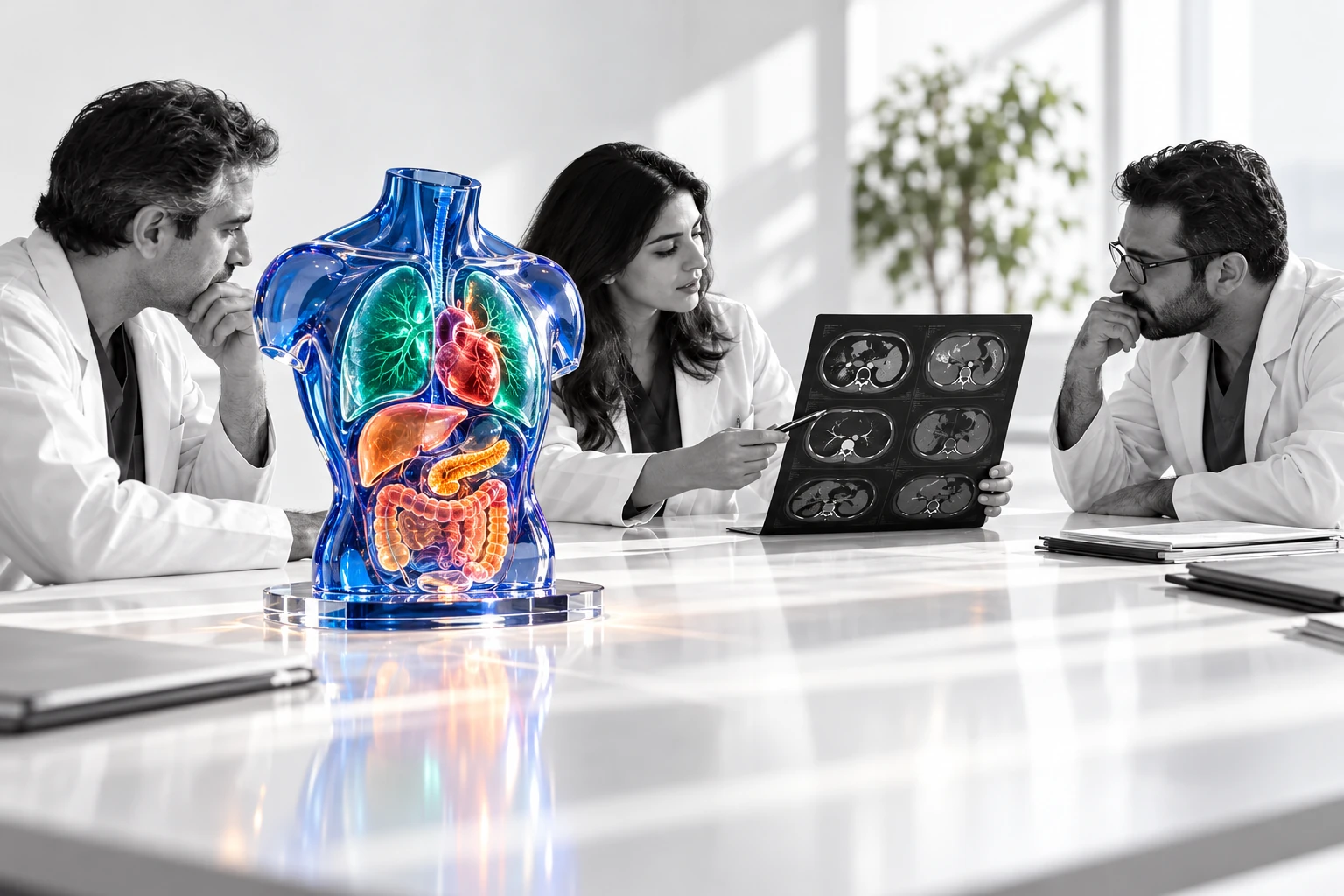
- CT (سیتیاسکن؛ تصویربرداری با پرتو ایکس برای دیدن اندامهای داخل بدن) برای مرحله بیماری و در موارد منتخب EUS (سونوگرافی از داخل دستگاه گوارش؛ به بررسی عمق و اطراف بعضی تودهها کمک میکند) و لاپاروسکوپی مرحلهبندی استفاده میشوند.
- در بیماری پیشرفته بررسی HER2 (پروتئینی که به رشد سلول کمک میکند؛ مقدار زیاد آن در بعضی سرطانها درمانهای ویژهای را مطرح میکند)، MMR (سامانهٔ ترمیم خطاهای DNA؛ عملکرد آن در برخی سرطانها برای انتخاب درمان مهم است)/MSI (ناپایداری بخشهایی از DNA؛ نتیجه میتواند در ارزیابی ارثی و انتخاب درمان مؤثر باشد)، PD-L1 (پروتئینی که میتواند فعالیت ایمنی را کم کند؛ سنجش آن گاهی در انتخاب ایمنیدرمانی کمک میکند) و در برخی موارد CLDN18.2 (پروتئینی روی برخی سلولهای سرطان معده؛ آزمایش آن ممکن است درمان هدفمند را مطرح کند) میتواند درمان را هدایت کند.
- Upper endoscopy with biopsy establishes diagnosis.
- CT (computed tomography, X-ray imaging of structures inside the body) is used for staging, with EUS (endoscopic ultrasound, which helps assess the depth and nearby structures of some tumors) and staging laparoscopy in selected patients.
- In advanced disease, HER2 (a growth-related protein; high levels in some cancers can point to specific treatments), MMR (the DNA mismatch-repair system, which can guide treatment in some cancers)/MSI (instability in parts of DNA that can inform inherited-risk assessment and treatment), PD-L1 (a protein that can dampen immune activity; testing it can help guide some immunotherapy choices) and in some settings CLDN18.2 (a protein on some stomach cancer cells; testing can identify eligibility for targeted treatment) can guide therapy.
توضیح تکمیلی: مرحلهبندی سرطان
Cancer staging
- آدنوکارسینوم معده معمولاً با TNM (روش توصیف اندازه و گسترش تومور، درگیری غدد لنفاوی و پخششدن به بخشهای دور بدن) به مراحل I تا IV تقسیم میشود.
- عمق نفوذ، تعداد غدد لنفاوی درگیر و متاستاز اجزای اصلی مرحله بیماری هستند.
- Gastric adenocarcinoma is generally staged by TNM (a system describing tumor size and local spread, lymph-node involvement and distant spread) from I to IV.
- Depth of invasion, involved nodes and distant metastasis are central components.
توضیح تکمیلی: درمان
Treatment
- در بیماری قابل جراحی، برداشت مناسب معده و غدد لنفاوی همراه با درمان سیستمیک قبل و/یا بعد از جراحی مطرح است.
- در بیماری پیشرفته از شیمیدرمانی و بر اساس بیومارکرها (نشانهای در بافت یا خون که میتواند دربارهٔ ویژگی بیماری یا انتخاب درمان اطلاعات بدهد) از درمان هدفمند یا ایمنیدرمانی استفاده میشود.
- حمایت تغذیهای نیز بخش مهم درمان است.
- Resectable disease uses appropriate gastric and nodal surgery plus systemic therapy before and/or after surgery.
- Advanced disease uses chemotherapy and biomarker (a measurable feature in tissue or blood that can help describe disease or guide treatment)-directed targeted or immune therapy.
- Nutritional support is also essential.
پیگیری و پیشآگهی
Prognosis and follow-up
- stage و امکان برداشت کامل بیماری اثر زیادی بر پیشآگهی دارند.
- پیگیری باید علاوه بر عود، کمبودهای تغذیهای، کاهش وزن و عوارض جراحی را نیز بررسی کند.
- Stage and complete disease removal strongly influence prognosis.
- Follow-up should monitor recurrence, nutritional deficiencies, weight loss and postsurgical effects.
کارهای مهم برای بیمار
Practical next steps
- نوع دقیق پاتولوژی، stage و بیومارکرهای لازم را مشخص کنید و اگر جراحی مطرح است درباره تجربه مرکز و حمایت تغذیهای سؤال کنید.
- Clarify histology, stage and relevant biomarkers; if surgery is planned, ask about center experience and nutritional support.