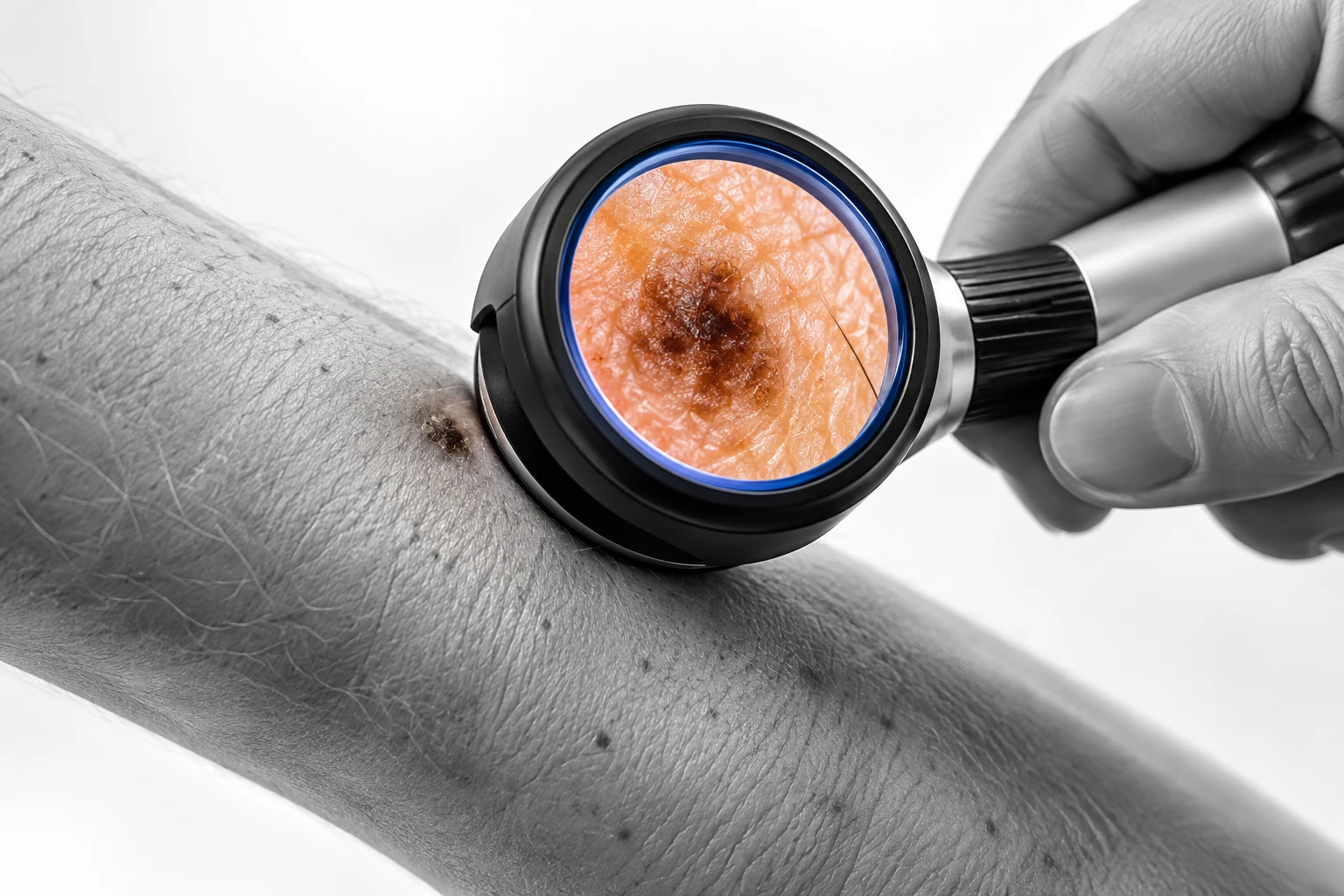
توضیح تکمیلی: سرطان پوست چیست؟
Understanding skin cancer
- سرطان پوست چند گروه دارد: سلول پایهای، سلول سنگفرشی و ملانوما.
- ملانوما کمتر شایع است اما میتواند رفتار تهاجمیتری داشته باشد؛ نوع دقیق ضایعه مسیر درمان را تعیین میکند.
- Skin cancer includes basal cell cancer, squamous cell cancer and melanoma.
- Melanoma is less common but can be more aggressive; the exact type determines care.
توضیح تکمیلی: جایگاه و اهمیت
Why it matters
- سرطانهای پوست یک گروه متنوعاند؛ ملانوما با انواع شایعتر سلول پایهای و سنگفرشی یکسان نیست.
- تغییر ضایعه پوستی و محافظت از آفتاب اهمیت دارند.
- ملانوما، موارد جدید در ۲۰۲۴: ایران ۷۴۴؛ جهان ۳۳۷٬۹۶۹.
- Skin cancers are diverse; melanoma differs from the more common basal and squamous cell cancers.
- Changing lesions and sun protection matter.
- Melanoma, new cases in 2024: Iran 744; worldwide 337,969.
توضیح تکمیلی: علائم و نشانهها
Signs and symptoms
- خال در حال تغییر، نامتقارن یا چندرنگ
- زخم خوبنشونده یا ضایعه در حال رشد و خونریزی
- اندازه کوچک یا نداشتن درد، بدخیمی را رد نمیکند.
- A changing, asymmetric or multicolored mole
- A non-healing sore or a growing or bleeding lesion
- Small size or absence of pain does not rule out cancer.
توضیح تکمیلی: عوامل خطر و علتها
Risk factors and causes
- پرتو فرابنفش خورشید، سولاریوم و آفتابسوختگی
- پوست روشن، ضعف ایمنی و در بعضی انواع سابقه خانوادگی
- محافظت از آفتاب برای همه رنگهای پوست مفید است.
- Ultraviolet exposure, tanning beds and sunburn
- Fair skin, immune suppression and family history in some types
- Sun protection is useful for all skin tones.
توضیح تکمیلی: روشهای تشخیص
Diagnostic assessment
- تشخیص قطعی با نمونهبرداری پوست انجام میشود.
- برای ملانوما گزارش باید ضخامت Breslow و سایر ویژگیهای مهم را مشخص کند؛ برای سرطان سلول سنگفرشی پرخطر محل، اندازه، عمق و وضعیت ایمنی بیمار اهمیت دارند.
- Skin biopsy establishes diagnosis.
- In melanoma, pathology should report Breslow thickness and other key features; for high-risk SCC, site, size, depth and immune status matter.
توضیح تکمیلی: مرحلهبندی سرطان
Cancer staging
- سرطان سلول پایهای معمولاً بر اساس خطر موضعی مدیریت میشود.
- سرطان سلول سنگفرشی پرخطر و ملانوما میتوانند با TNM (روش توصیف اندازه و گسترش تومور، درگیری غدد لنفاوی و پخششدن به بخشهای دور بدن) مرحلهبندی شوند و در ملانوما ضخامت تومور و وضعیت غدد لنفاوی اهمیت ویژه دارند.
- BCC is usually managed by local risk.
- High-risk SCC and melanoma can use TNM (a system describing tumor size and local spread, lymph-node involvement and distant spread) staging; in melanoma, tumor thickness and nodal status are particularly important.
توضیح تکمیلی: درمان
Treatment
- بیشتر سرطان سلول پایهای و سرطانهای سلول سنگفرشی با جراحی، از جمله موس (برداشت لایهبهلایه با بررسی حاشیه) در محلهای مناسب، درمان میشوند.
- ملانوما موضعی با برداشت جراحی مناسب و در موارد منتخب نمونهبرداری از غده لنفاوی نگهبان درمان میشود؛ بیماری پیشرفته میتواند به ایمنیدرمانی یا درمان هدفمند نیاز داشته باشد.
- Most BCCs and SCCs are treated surgically, including Mohs surgery when appropriate.
- Localized melanoma is treated with adequate excision and selected sentinel-node biopsy; advanced disease may require immunotherapy or targeted therapy.
پیگیری و پیشآگهی
Prognosis and follow-up
- BCC معمولاً پیشآگهی بسیار خوبی دارد.
- SCC پرخطر و melanoma به stage وابستهاند.
- پس از یک سرطان پوست، خطر ضایعات جدید بیشتر است و معاینه پوست و محافظت در برابر UV باید ادامه یابد.
- BCC generally has an excellent prognosis.
- High-risk SCC and melanoma outcomes depend on stage.
- After any skin cancer, risk of new lesions is higher, so skin checks and UV protection should continue.
کارهای مهم برای بیمار
Practical next steps
- نوع دقیق سرطان پوست را از روی پاتولوژی مشخص کنید و برای melanoma ضخامت Breslow و stage را بدانید.
- درباره حاشیه جراحی، Mohs یا sentinel node و برنامه معاینه پوست سؤال کنید.
- Know the exact subtype; for melanoma, know Breslow thickness and stage.
- Ask about surgical margins, Mohs or sentinel-node biopsy and your skin-surveillance plan.