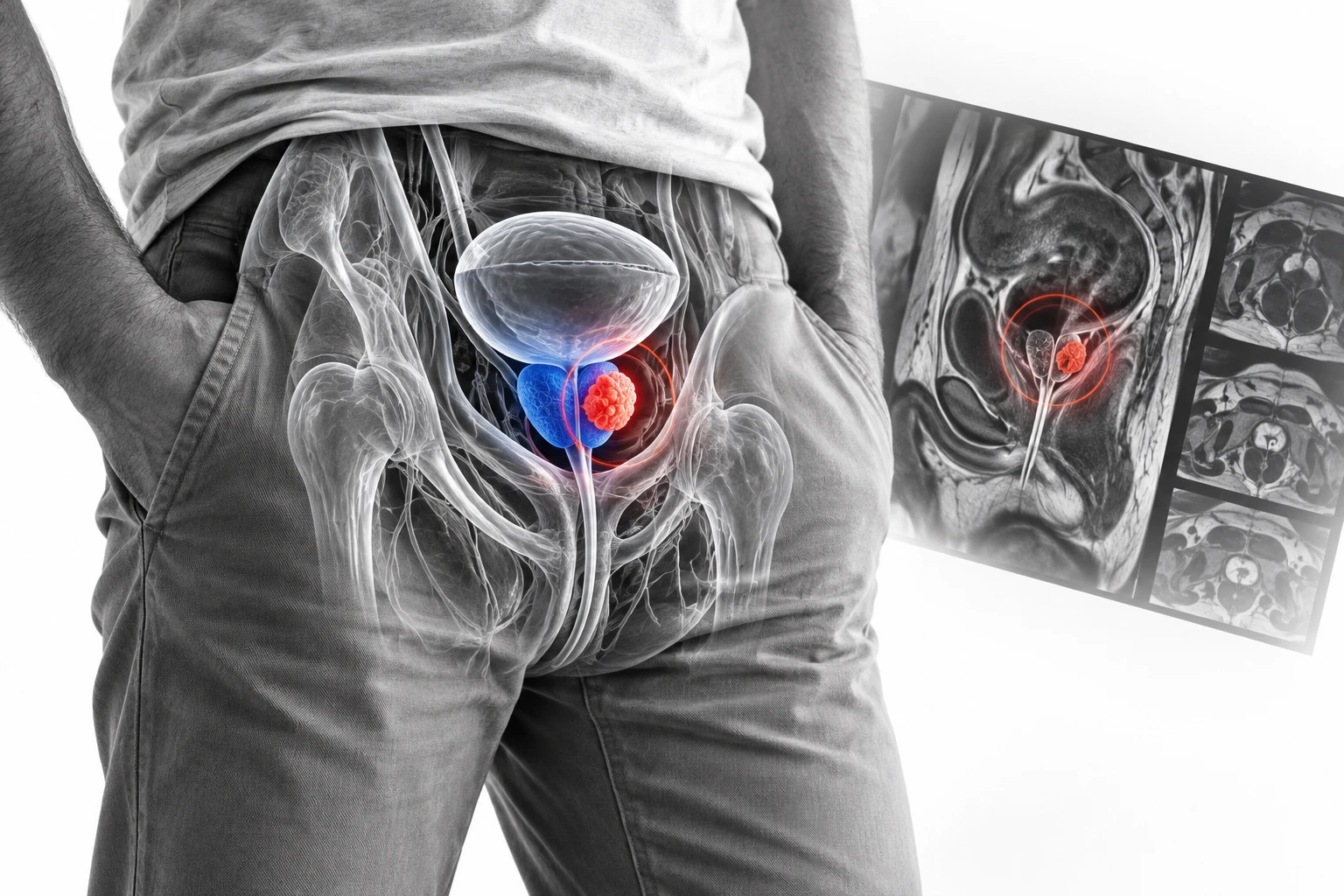
سرطان پروستات چیست؟
Understanding prostate cancer
- Prostate cancer develops in the prostate gland.
- Some tumors grow slowly and others are aggressive; grade and risk group help avoid both overtreatment and undertreatment.
- سرطان غدهٔ پروستات در مردان
- رفتار متفاوت؛ از رشد آهسته تا بیماری تهاجمی
جایگاه و اهمیت
Why it matters
- A common cancer in men, with widely varying behavior.
- Some low-risk cancers suit active surveillance, while others need earlier treatment.
- New cases in 2024: Iran 10,024; worldwide 1,546,112.
- از سرطانهای شایع مردان
- رفتار متفاوت؛ از موارد کمخطر تا تهاجمی
- موارد جدید در ۲۰۲۴: ایران ۱۰٬۰۲۴؛ جهان ۱٬۵۴۶٬۱۱۲.
علائم و نشانهها
Signs and symptoms
- Early cancer often has no symptoms.
- Urinary difficulty, blood in urine or persistent bone pain
- Urinary symptoms more often have benign causes, but need assessment.
- احتمالِ بیعلامتبودن در شروع
- تغییر جریان یا دفعات ادرار
- خون در ادرار
- درد استخوان در برخی موارد پیشرفته
عوامل خطر و علتها
Risk factors and causes
- Older age, family history or inherited variants such as BRCA2
- A high PSA is not a cancer diagnosis; inflammation and benign enlargement can also raise it.
- افزایش سن
- سابقهٔ خانوادگی
- برخی تغییرهای ارثی
روشهای تشخیص
Diagnostic assessment
- PSA (prostate-specific antigen; a raised result alone does not prove cancer) and examination may start evaluation.
- Prostate MRI (magnetic resonance imaging, which uses magnetic fields rather than X-rays) helps target biopsy, which establishes diagnosis.
- Higher-risk disease often requires staging imaging, including PSMA PET (targeted imaging used in selected prostate cancers to assess spread) in many settings.
- بررسی PSA همراه با شرح حال و معاینه
- امآرآی و نمونهبرداری در صورت نیاز
- تعیین درجهٔ بافتی و گروه خطر
معنی اصطلاحات این بخش
- PSA
- آزمایش خونیِ مرتبط با پروستات؛ قابل افزایش در علتهای غیرسرطانی نیز
مرحلهبندی سرطان
Cancer staging
- TNM (a system describing tumor size and local spread, lymph-node involvement and distant spread) is combined with PSA and Grade Group/Gleason (a grading system for prostate-cancer cells in a biopsy; higher grades generally indicate more aggressive behavior) to define stage and risk.
- Risk classification in localized disease helps choose among active surveillance, surgery and radiation.
- اندازه و گسترش تومور اولیه
- درگیری غدد لنفاوی
- انتشار به بخشهای دور بدن
- ویژگیهای بافتی یا سلولیِ مؤثر بر درمان
درمان
Treatment
- Options include active surveillance, prostatectomy, radiation and androgen-deprivation therapy.
- High-risk or metastatic disease may combine hormonal therapy with newer agents, chemotherapy or targeted/radioligand approaches.
- پایش فعال برای بعضی موارد کمخطر
- جراحی یا پرتودرمانی برای موارد مناسب
- درمان هورمونی و داروهای دیگر بر اساس گسترهٔ بیماری
جزئیات بیشترFurther detail
توضیح تکمیلی: سرطان پروستات چیست؟
Understanding prostate cancer
- این سرطان در غده پروستات ایجاد میشود.
- بعضی تومورها آهسته رشد میکنند و برخی رفتار تهاجمی دارند؛ درجه بافتی و گروه خطر کمک میکنند از درمان بیش از نیاز یا کمتر از نیاز پیشگیری شود.
- Prostate cancer develops in the prostate gland.
- Some tumors grow slowly and others are aggressive; grade and risk group help avoid both overtreatment and undertreatment.
توضیح تکمیلی: جایگاه و اهمیت
Why it matters
- از سرطانهای شایع مردان است؛ اما رفتار همه موارد یکسان نیست.
- بعضی انواع کمخطر به پایش فعال و بعضی به درمان زودتر نیاز دارند.
- موارد جدید در ۲۰۲۴: ایران ۱۰٬۰۲۴؛ جهان ۱٬۵۴۶٬۱۱۲.
- A common cancer in men, with widely varying behavior.
- Some low-risk cancers suit active surveillance, while others need earlier treatment.
- New cases in 2024: Iran 10,024; worldwide 1,546,112.
توضیح تکمیلی: علائم و نشانهها
Signs and symptoms
- سرطان اولیه اغلب علامت ندارد.
- مشکل دفع ادرار، خون در ادرار یا درد استخوان ماندگار
- مشکل ادراری بیشتر علت خوشخیم دارد، اما باید بررسی شود.
- Early cancer often has no symptoms.
- Urinary difficulty, blood in urine or persistent bone pain
- Urinary symptoms more often have benign causes, but need assessment.
توضیح تکمیلی: عوامل خطر و علتها
Risk factors and causes
- سن بالا، سابقه خانوادگی یا تغییرات ارثی مانند BRCA2
- PSA بالا بهتنهایی تشخیص سرطان نیست؛ التهاب و بزرگی خوشخیم هم آن را بالا میبرند.
- Older age, family history or inherited variants such as BRCA2
- A high PSA is not a cancer diagnosis; inflammation and benign enlargement can also raise it.
توضیح تکمیلی: روشهای تشخیص
Diagnostic assessment
- PSA (آنتیژن اختصاصی پروستات؛ بالا بودن آن بهتنهایی سرطان را ثابت نمیکند) و معاینه میتوانند شروع ارزیابی باشند.
- MRI (امآرآی؛ تصویربرداری با میدان مغناطیسی و بدون پرتو ایکس) پروستات به هدفگیری نمونهبرداری کمک میکند و تشخیص با نمونهبرداری انجام میشود.
- در بیماری با خطر بالاتر، تصویربرداری مرحلهبندی از جمله PSMA PET (نوعی تصویربرداری هدفمند که در برخی موارد سرطان پروستات برای بررسی گسترش بهکار میرود) در بسیاری از مراکز استفاده میشود.
- PSA (prostate-specific antigen; a raised result alone does not prove cancer) and examination may start evaluation.
- Prostate MRI (magnetic resonance imaging, which uses magnetic fields rather than X-rays) helps target biopsy, which establishes diagnosis.
- Higher-risk disease often requires staging imaging, including PSMA PET (targeted imaging used in selected prostate cancers to assess spread) in many settings.
توضیح تکمیلی: مرحلهبندی سرطان
Cancer staging
- مرحلهبندی TNM (روش توصیف اندازه و گسترش تومور، درگیری غدد لنفاوی و پخششدن به بخشهای دور بدن) همراه با PSA، گروه درجهبندی بافتی (Grade Group) و امتیاز Gleason (درجهبندی شکل سلولهای سرطان پروستات در نمونهبرداری؛ عدد بالاتر معمولاً رفتار تهاجمیتری را نشان میدهد) برای تعیین مرحله و گروه خطر استفاده میشود.
- گروه خطر در بیماری موضعی به انتخاب بین پایش فعال، جراحی و پرتودرمانی کمک میکند.
- TNM (a system describing tumor size and local spread, lymph-node involvement and distant spread) is combined with PSA and Grade Group/Gleason (a grading system for prostate-cancer cells in a biopsy; higher grades generally indicate more aggressive behavior) to define stage and risk.
- Risk classification in localized disease helps choose among active surveillance, surgery and radiation.
توضیح تکمیلی: درمان
Treatment
- گزینهها شامل پایش فعال، پروستاتکتومی، پرتودرمانی و درمان محرومیت از آندروژن هستند.
- در بیماری پرخطر یا متاستاتیک، درمان هورمونی با داروهای جدیدتر، شیمیدرمانی یا درمانهای هدفمند/رادیولیگاند در شرایط مناسب ترکیب میشود.
- Options include active surveillance, prostatectomy, radiation and androgen-deprivation therapy.
- High-risk or metastatic disease may combine hormonal therapy with newer agents, chemotherapy or targeted/radioligand approaches.
پیگیری و پیشآگهی
Prognosis and follow-up
- بیماری موضعی اغلب پیشآگهی بسیار خوبی دارد، اما بیماری متاستاتیک معمولاً به درمان طولانیمدت نیاز دارد.
- PSA ابزار اصلی پیگیری است و سلامت استخوان، متابولیسم و عوارض جنسی/ادراری نیز باید مدیریت شوند.
- Localized disease often has an excellent outlook, whereas metastatic disease usually requires long-term therapy.
- PSA is central to follow-up, along with bone, metabolic, urinary and sexual health.
کارهای مهم برای بیمار
Practical next steps
- PSA، Grade Group، stage و گروه خطر خود را دقیق بدانید و درباره امکان پایش فعال، عوارض درمان، تست ژنتیک و تصویربرداری مناسب سؤال کنید.
- Know your PSA, Grade Group, stage and risk category and ask about active surveillance, treatment effects, genetic testing and appropriate imaging.
سوالهای رایجCommon questions
دربارهٔ عوارض ادراری خجالت میکشم؛ چه کنم؟How can I raise concerns about urinary symptoms?
پیش از ویزیت علائم و پرسشها را یادداشت کنید؛ بررسی این مشکلات بخشی معمول از مراقبت است و راههای حمایتی وجود دارد.
Write down symptoms and questions before the visit. Discussing these concerns is a routine part of care and supportive options exist.
با درمان هورمونی به سلامت استخوان توجه کنم؟Does hormone therapy affect bone health?
برخی درمانها خطر کاهش تراکم استخوان را بالا میبرند؛ دربارهٔ فعالیت بدنی، ارزیابی خطر شکستگی و نیاز به بررسی استخوان سؤال کنید.
Some treatments increase bone loss. Ask about activity, fracture-risk assessment and whether bone testing is needed.
اگر PSA بالا رفت خودم درمان را تغییر دهم؟Should I change treatment after a PSA rise?
خیر؛ یک عدد بهتنهایی کافی نیست. روند نتیجه، علائم و برنامهٔ درمان باید با هم بررسی شوند.
No. One result is not enough. The trend, symptoms and treatment plan need to be assessed together.
در ویزیت دربارهٔ سلامت جنسی صحبت کنم؟Should I discuss sexual health during visits?
بله؛ پیش از انتخاب درمان دربارهٔ تغییرات احتمالی و روشهای کمککننده سؤال کنید تا تصمیم با اولویتهای شما هماهنگ باشد.
Yes. Ask about possible effects and supportive options before choosing treatment so decisions reflect your priorities.