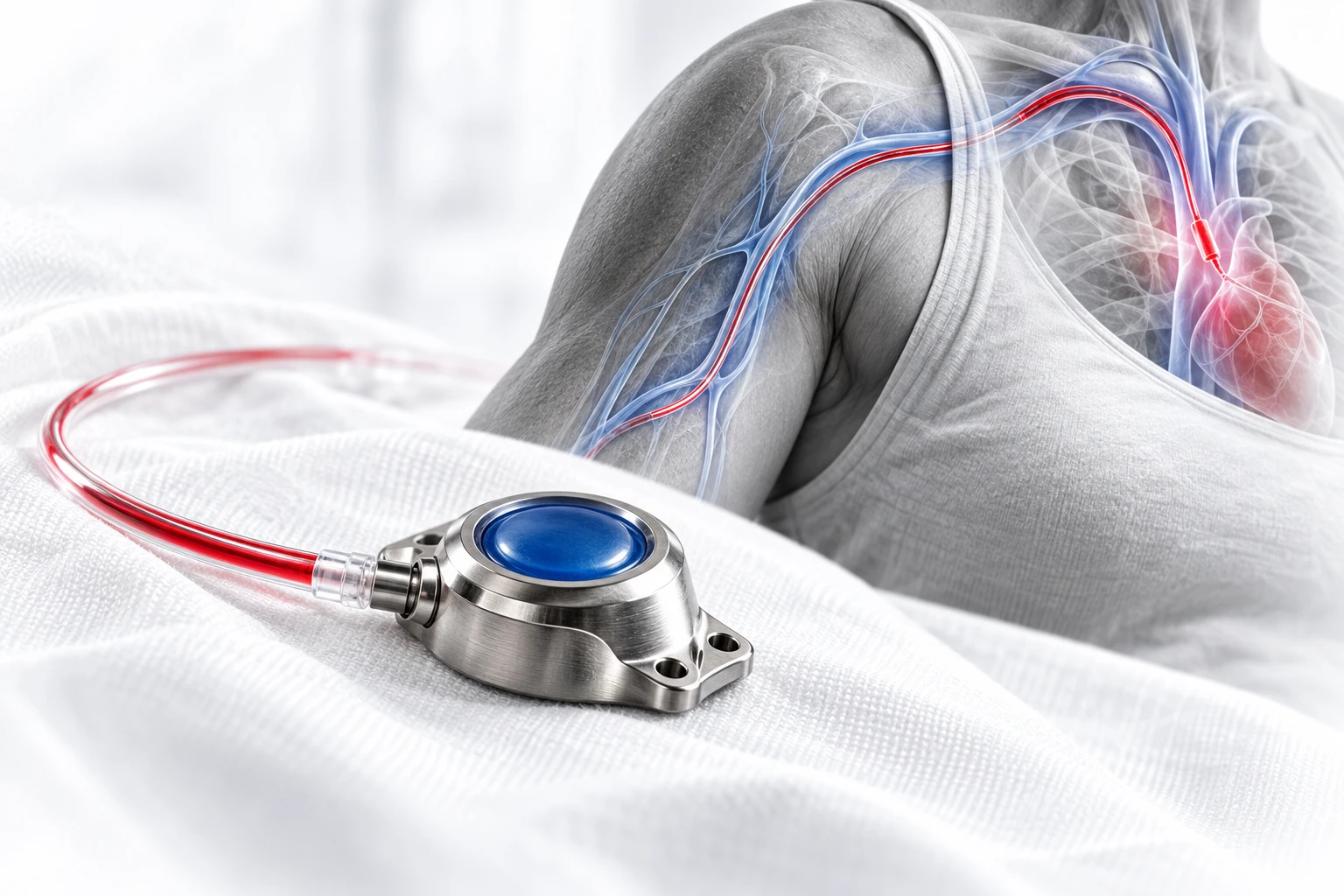
توضیح تکمیلی: Port و PICC چه هستند؟
What are ports and PICCs?
- Port زیر پوست قرار میگیرد و از طریق کاتتر به یک ورید بزرگ متصل است.
- PICC از ورید بازو وارد میشود و تا یک ورید مرکزی ادامه پیدا میکند.
- هر دو میتوانند برای دارو یا خونگیری استفاده شوند.
- A port sits under the skin and connects by catheter to a large vein.
- A PICC enters through an arm vein and extends to a central vein.
- Both can be used for medicines or blood draws.
توضیح تکمیلی: برای چه کسی و چه زمانی؟
Who is this for?
- این راهنما برای بیمار و همراهی است که در طول درمان باید خطر عفونت یا مشکل مسیر وریدی را زود بشناسند و مسیر تماس با تیم را بدانند.
- This guide helps patients and caregivers recognize infection or line problems during treatment and know how to reach the care team.
توضیح تکمیلی: قدم عملی شما
Your practical next step
- نوع وسیله، برنامه پانسمان و شستوشو و شماره تماس مرکز را یادداشت کنید.
- ناحیه را طبق آموزش خشک و تمیز نگه دارید و پیش از لمس دستها را بشویید.
- Record the device type, dressing and flushing schedule, and center contact.
- Keep the area clean and dry as instructed and wash hands before handling.
توضیح تکمیلی: از این کارها پرهیز کنید
What to avoid
- مسیر بسته را با فشار شستوشو ندهید و وسیله جابهجا شده را عقب نرانید.
- نشتی، درد تزریق، قرمزی، تب یا تورم بازو باید گزارش شود.
- Never force-flush a blocked line or push a displaced device back.
- Report leakage, infusion pain, redness, fever or arm swelling.
توضیح تکمیلی: چه زمانی کمک بگیریم؟
When to ask for help
- تب یا لرز در طول درمان، ترشح یا درد مسیر وریدی و تورم تازه بازو را فوری گزارش کنید.
- تنگی نفس ناگهانی، گیجی یا بدحالی شدید نیاز به ارزیابی اورژانسی دارد.
- Immediately report fever or chills during treatment, line drainage or pain, and new arm swelling.
- Sudden breathlessness, confusion or severe illness needs emergency assessment.
مراقبت روزمره
Routine care
- پانسمان، دسترسی با سوزن، شستوشو و زمان تعویض تجهیزات باید طبق دستور تیم درمان انجام شود.
- وسیله را خودسرانه دستکاری نکنید و درباره دوش گرفتن، ورزش و محدودیتهای اختصاصی سؤال کنید.
- Dressings, needle access, flushing and equipment changes should follow the care team’s instructions.
- Do not manipulate the device yourself, and ask about showering, exercise and device-specific restrictions.
علائم هشدار
Warning signs
- تب، قرمزی، درد، ترشح یا تورم اطراف مسیر کاتتر باید سریع گزارش شود.
- تورم یکطرفه دست یا گردن، درد قفسه سینه یا تنگی نفس نیز میتواند نیاز به ارزیابی فوری داشته باشد.
- Fever, redness, pain, drainage or swelling around the catheter should be reported promptly.
- One-sided arm or neck swelling, chest pain or shortness of breath may also require urgent evaluation.
نوع وسیله، مراقبت را تغییر میدهد
Device type changes care
- پورت زیرپوستی و PICC یکسان نیستند.
- نوع پانسمان، زمان تعویض و برنامهٔ شستوشو باید مطابق وسیله و دستور مرکز باشد؛ دستکاری مسیر بدون آموزش، خطر عفونت و خرابی را بالا میبرد.
- An implanted port and a PICC are different devices.
- Dressing and flushing schedules must follow the device and center’s instructions; untrained manipulation increases infection and damage risk.
تشخیص زودهنگام مشکل
Recognizing a problem early
- تغییر طول قسمت بیرونی PICC، نشتی، درد هنگام تزریق یا مقاومت تازه در مسیر نیاز به بررسی دارد.
- تا روشنشدن علت از استفادهٔ خودسرانه پرهیز کنید و گزارش دقیق تغییر را به تیم بدهید.
- A change in external PICC length, leakage, infusion pain or new resistance needs assessment.
- Avoid unsupervised use until the cause is clarified and describe the change to the team.