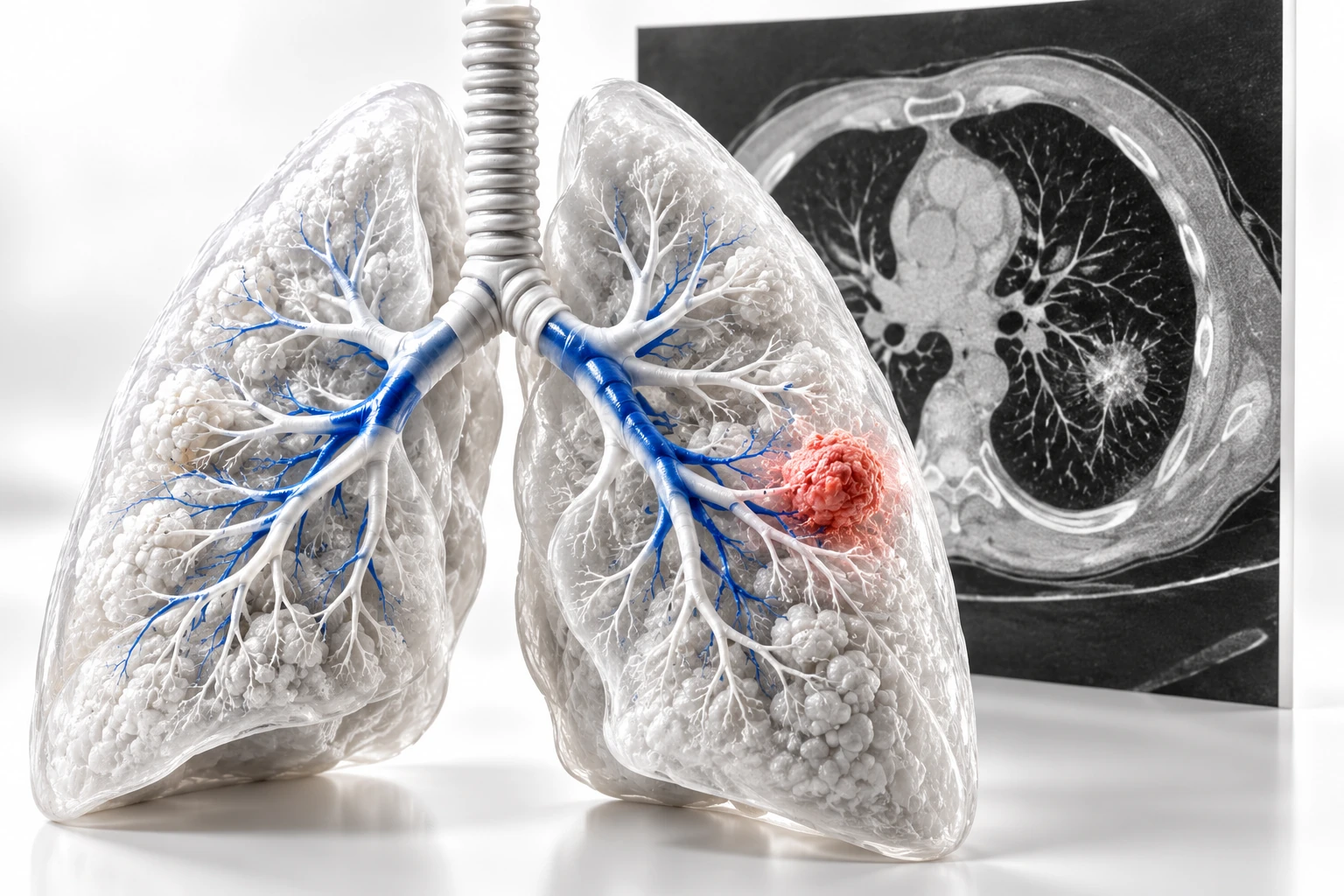
توضیح تکمیلی: سرطان ریه چیست؟
Understanding lung cancer
- سرطان ریه اغلب در سلولهای راههای هوایی یا بافت ریه شروع میشود.
- دو گروه اصلی، سلول غیرکوچک و سلول کوچکاند؛ این تفاوت و آزمایشهای مولکولی روی انتخاب درمان اثر دارند.
- Lung cancer usually begins in airway or lung cells.
- The main groups are non-small cell and small cell cancer; this distinction and molecular testing (a test that looks for gene or molecular changes; results must be interpreted with the disease type) affect treatment.
توضیح تکمیلی: جایگاه و اهمیت
Why it matters
- از شایعترین سرطانهای جهان و مهمترین علت مرگ ناشی از سرطان است.
- پیشگیری از مصرف دخانیات و تشخیص بهموقع، اهمیت ویژه دارند.
- موارد جدید در ۲۰۲۴: ایران ۹٬۰۰۲؛ جهان ۲٬۶۳۷٬۰۰۵.
- Among the most common cancers and the leading cause of cancer death worldwide.
- Tobacco prevention and timely diagnosis are especially important.
- New cases in 2024: Iran 9,002; worldwide 2,637,005.
توضیح تکمیلی: علائم و نشانهها
Signs and symptoms
- سرفه ماندگار یا تغییر سرفه همیشگی
- خلط خونی، تنگی نفس یا درد قفسه سینه
- کاهش وزن بیدلیل؛ خلط خونی قابل توجه یا نفستنگی شدید نیاز به اقدام فوری دارد.
- Persistent cough or change in a usual cough
- Coughing blood, breathlessness or chest pain
- Unexplained weight loss; significant bleeding or severe breathlessness needs urgent care.
توضیح تکمیلی: عوامل خطر و علتها
Risk factors and causes
- دخانیات: مهمترین عامل خطر قابل پیشگیری
- دود دست دوم، رادون، آزبست، مواجهههای شغلی و آلودگی هوا
- افراد غیرسیگاری هم ممکن است مبتلا شوند.
- Tobacco: the leading preventable risk
- Secondhand smoke, radon, asbestos, occupational exposures and air pollution
- People who never smoked may also develop lung cancer.
توضیح تکمیلی: روشهای تشخیص
Diagnostic assessment
- CT (سیتیاسکن؛ تصویربرداری با پرتو ایکس برای دیدن اندامهای داخل بدن) قفسه سینه، PET/CT (ترکیب تصویربرداری متابولیک و سیتیاسکن برای بررسی فعالیت و محل برخی ضایعات) در موارد مناسب و نمونهبرداری برای تعیین نوع تومور استفاده میشوند.
- در NSCLC (سرطان ریهٔ سلول غیرکوچک؛ گروهی از سرطانهای ریه با بررسی و درمان متفاوت) بررسی بیومارکرها (نشانهای در بافت یا خون که میتواند دربارهٔ ویژگی بیماری یا انتخاب درمان اطلاعات بدهد)ی قابل هدف و PD-L1 (پروتئینی که میتواند فعالیت ایمنی را کم کند؛ سنجش آن گاهی در انتخاب ایمنیدرمانی کمک میکند) اهمیت زیادی دارد و در برخی مراحل MRI (امآرآی؛ تصویربرداری با میدان مغناطیسی و بدون پرتو ایکس) مغز نیز انجام میشود.
- Chest CT (computed tomography, X-ray imaging of structures inside the body), PET/CT (combined metabolic and CT imaging to assess activity and location of some lesions) when appropriate and biopsy define tumor type.
- In NSCLC (non-small-cell lung cancer, a group assessed and treated differently from small-cell lung cancer), actionable biomarkers and PD-L1 (a protein that can dampen immune activity; testing it can help guide some immunotherapy choices) are important, and brain MRI (magnetic resonance imaging, which uses magnetic fields rather than X-rays) is used in selected stages.
توضیح تکمیلی: مرحلهبندی سرطان
Cancer staging
- سرطان ریهٔ سلول غیرکوچک بر پایهٔ اندازه و گسترش تومور، غدد لنفاوی و انتشار دوردست از مرحلهٔ ۱ تا ۴ ارزیابی میشود.
- در سرطان سلول کوچک، TNM (روش توصیف اندازه و گسترش تومور، درگیری غدد لنفاوی و پخششدن به بخشهای دور بدن) و تقسیمبندی محدود یا گسترده به کار میروند؛ محدود بودن فقط به معنای داخل قفسهٔ سینه بودن نیست و امکان پوشش بیماری در میدان پرتودرمانیِ قابلتحمل نیز اهمیت دارد.
- Non-small-cell lung cancer is staged from I to IV using tumor extent, lymph nodes and distant spread.
- Small-cell lung cancer uses TNM (a system describing tumor size and local spread, lymph-node involvement and distant spread) and limited/extensive categories.
- Limited disease is not defined simply by being inside the chest: whether it can be encompassed within a tolerable radiation field also matters.
توضیح تکمیلی: درمان
Treatment
- NSCLC اولیه میتواند با جراحی یا پرتودرمانی استریوتاکتیک درمان قطعی شود و بر اساس مرحله درمان قبل یا بعد از جراحی اضافه میشود.
- بیماری پیشرفته از درمان هدفمند، ایمنیدرمانی و/یا شیمیدرمانی بر اساس بیومارکرها استفاده میکند.
- در سرطان ریهٔ سلول کوچکِ محدود، شیمیدرمانی همراه پرتودرمانی قفسهٔ سینه و در افراد واجد شرایط ایمنیدرمانی پس از آن مطرح است.
- در بیماری گسترده، شیمیدرمانی همراه ایمنیدرمانی برای بسیاری از بیماران مناسب است؛ پرتودرمانی بر اساس شرایط انتخاب میشود.
- Early NSCLC may be treated with curative surgery or stereotactic radiation, with perioperative therapy added by stage.
- Advanced disease uses biomarker (a measurable feature in tissue or blood that can help describe disease or guide treatment)-guided targeted therapy, immunotherapy and/or chemotherapy.
- Limited-stage SCLC (small-cell lung cancer, a type with distinct behaviour and treatment planning) is generally treated with chemotherapy and thoracic radiation, with subsequent immunotherapy for eligible patients.
- Extensive-stage disease often uses chemotherapy plus immunotherapy; radiation is selected according to clinical circumstances.
پیگیری و پیشآگهی
Prognosis and follow-up
- stage هنگام تشخیص، نوع تومور، وضعیت مولکولی و پاسخ به درمان بر پیشآگهی اثر دارند.
- پس از درمان با هدف علاج، CT دورهای و حمایت از ترک سیگار اهمیت دارد.
- Stage, tumor type, molecular profile and treatment response influence prognosis.
- After curative-intent therapy, periodic CT surveillance and smoking-cessation support are important.
کارهای مهم برای بیمار
Practical next steps
- نوع دقیق NSCLC یا SCLC (سرطان ریهٔ سلول کوچک؛ نوعی سرطان ریه با رفتار و برنامهٔ درمانی متفاوت)، stage، امکان جراحی، نتیجه تستهای مولکولی و PD-L1 و هدف درمان را مشخص کنید.
- Clarify NSCLC versus SCLC, stage, resectability, molecular and PD-L1 results, and treatment goal.