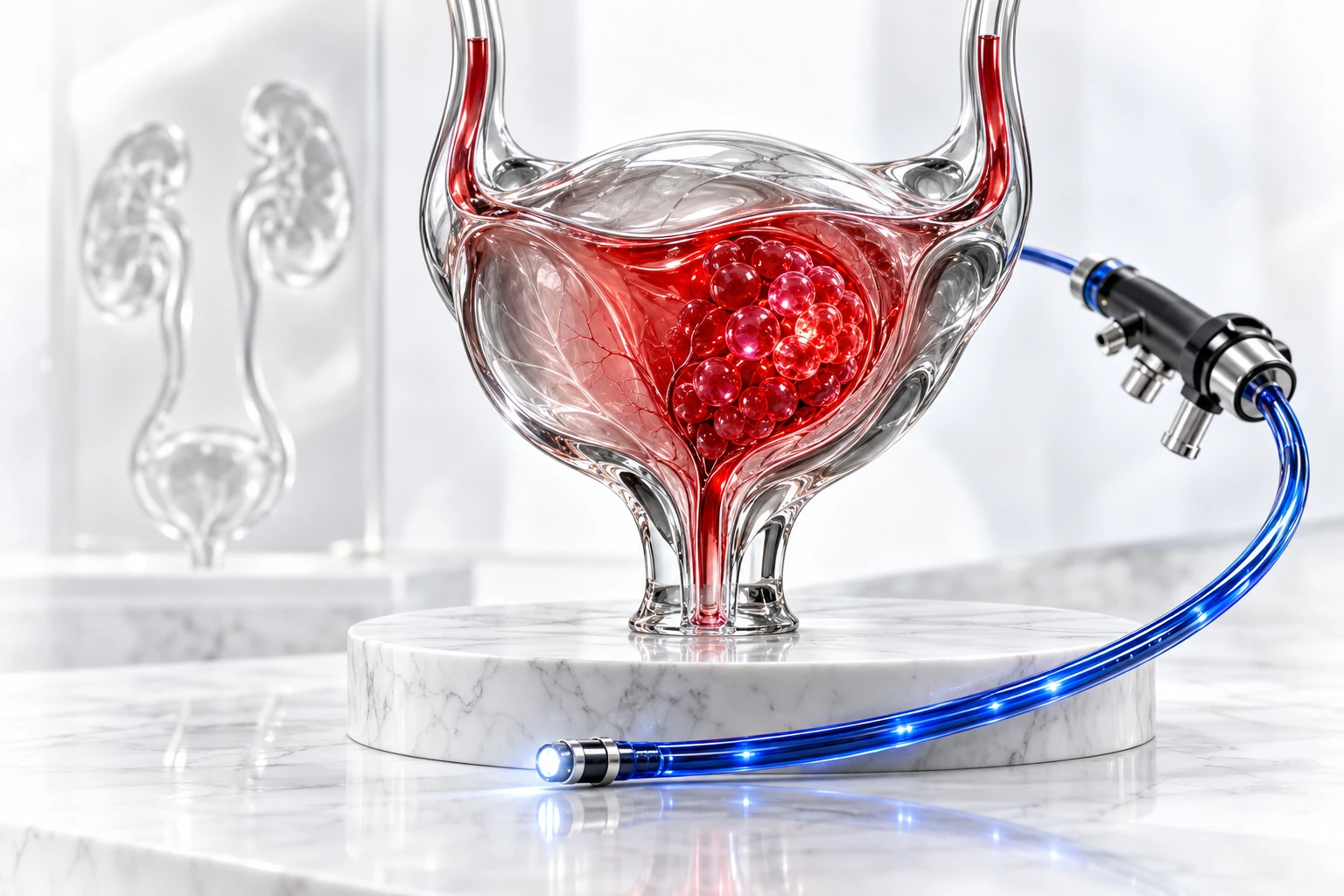
توضیح تکمیلی: سرطان مثانه چیست؟
Understanding bladder cancer
- بیشتر سرطانهای مثانه از سلولهای پوشش داخلی آن آغاز میشوند.
- تفاوت اصلی در نفوذ نکردن یا نفوذ کردن تومور به عضله مثانه است؛ این موضوع درمان و پیگیری را تغییر میدهد.
- Most bladder cancers start in its inner lining.
- Whether the tumor has reached the bladder muscle is a key distinction that changes treatment and follow-up.
توضیح تکمیلی: جایگاه و اهمیت
Why it matters
- از سرطانهای مهم دستگاه ادراری است.
- احتمال عود در بعضی انواع، اهمیت بررسی خون در ادرار و پیگیری منظم پس از درمان را بیشتر میکند.
- موارد جدید در ۲۰۲۴: ایران ۹٬۲۸۷؛ جهان ۶۳۵٬۲۶۴.
- An important urinary tract cancer.
- Recurrence in some types makes assessment of blood in urine and regular follow-up especially important.
- New cases in 2024: Iran 9,287; worldwide 635,264.
توضیح تکمیلی: علائم و نشانهها
Signs and symptoms
- خون بدون درد در ادرار؛ ممکن است قطع و دوباره ظاهر شود.
- تکرر یا سوزش ادرار
- خونریزیِ نسبتدادهشده به عفونت هم به پیگیری مناسب نیاز دارد.
- Painless blood in urine that may come and go
- Urinary frequency or burning
- Bleeding attributed to infection still needs appropriate follow-up.
توضیح تکمیلی: عوامل خطر و علتها
Risk factors and causes
- سیگار و برخی مواجهههای شغلی با مواد شیمیایی
- بعضی درمانهای قبلی سرطان
- ترک دخانیات هنگام تشخیص و پس از درمان هم ارزش دارد.
- Smoking and certain occupational chemical exposures
- Some previous cancer treatments
- Stopping tobacco is useful at diagnosis and after treatment.
توضیح تکمیلی: روشهای تشخیص
Diagnostic assessment
- ارزیابی معمولاً شامل تصویربرداری دستگاه ادراری و cystoscopy است.
- TURBT (برداشتن تومور مثانه از راه مجرای ادرار برای تشخیص و درمان اولیه) هم برای تشخیص و هم برای برداشتن تومور قابل مشاهده انجام میشود و پاتولوژی باید درجه بافتی و وجود یا نبود muscle invasion را مشخص کند.
- Evaluation usually includes urinary-tract imaging and cystoscopy.
- TURBT (transurethral removal of a bladder tumor for diagnosis and initial treatment) is both diagnostic and therapeutic for visible tumor, and pathology should define grade and whether muscle invasion is present.
توضیح تکمیلی: مرحلهبندی سرطان
Cancer staging
- بیماری عملاً به NMIBC و MIBC تقسیم میشود و TNM (روش توصیف اندازه و گسترش تومور، درگیری غدد لنفاوی و پخششدن به بخشهای دور بدن) نیز استفاده میشود.
- در NMIBC گروه خطر بر اساس مرحله بیماری، درجه بافتی، CIS، اندازه، تعداد و سابقه عود تعیین میشود.
- Disease is practically divided into NMIBC and MIBC, with TNM (a system describing tumor size and local spread, lymph-node involvement and distant spread) also used.
- NMIBC risk groups incorporate stage, grade, CIS, tumor size, number and recurrence history.
توضیح تکمیلی: درمان
Treatment
- NMIBC بر اساس خطر با TURBT، درمان داخل مثانه مانند BCG یا شیمیدرمانی داخل مثانه و cystoscopyهای پیگیری درمان میشود.
- MIBC در بیماران مناسب معمولاً با شیمیدرمانی مبتنی بر سیسپلاتین و cystectomy یا در شرایط منتخب با حفظ مثانه درمان میشود.
- بیماری پیشرفته گزینههای ایمنیدرمانی و درمانهای جدیدتر دارد.
- NMIBC is managed with TURBT, risk-adapted intravesical therapy such as BCG or chemotherapy and cystoscopic surveillance.
- Fit patients with MIBC often receive cisplatin-based chemotherapy and cystectomy, while selected patients can pursue bladder preservation.
- Advanced disease has immunotherapy and newer systemic options.
پیگیری و پیشآگهی
Prognosis and follow-up
- stage و grade بر پیشآگهی اثر دارند.
- NMIBC احتمال عود قابل توجهی دارد و به cystoscopy منظم نیاز دارد؛ در MIBC و بیماری پیشرفته، stage و پاسخ به درمان تعیینکنندهتر هستند.
- Stage and grade influence prognosis.
- NMIBC has substantial recurrence risk and needs regular cystoscopy; in MIBC and advanced disease, stage and treatment response are more important.
کارهای مهم برای بیمار
Practical next steps
- از گزارش TURBT بپرسید آیا عضله در نمونه وجود داشته و آیا درگیر است.
- گروه خطر NMIBC یا stage MIBC، نیاز به re-TURBT، BCG، شیمیدرمانی قبل از جراحی و گزینه حفظ مثانه را روشن کنید.
- Ask whether muscle was present in the TURBT specimen and whether it was invaded.
- Clarify NMIBC risk group or MIBC stage, need for repeat TURBT, BCG, preoperative chemotherapy and bladder-preservation options.